Is Your Sports Facility Ready for the Monsoon? A Pre-Rain Checklist
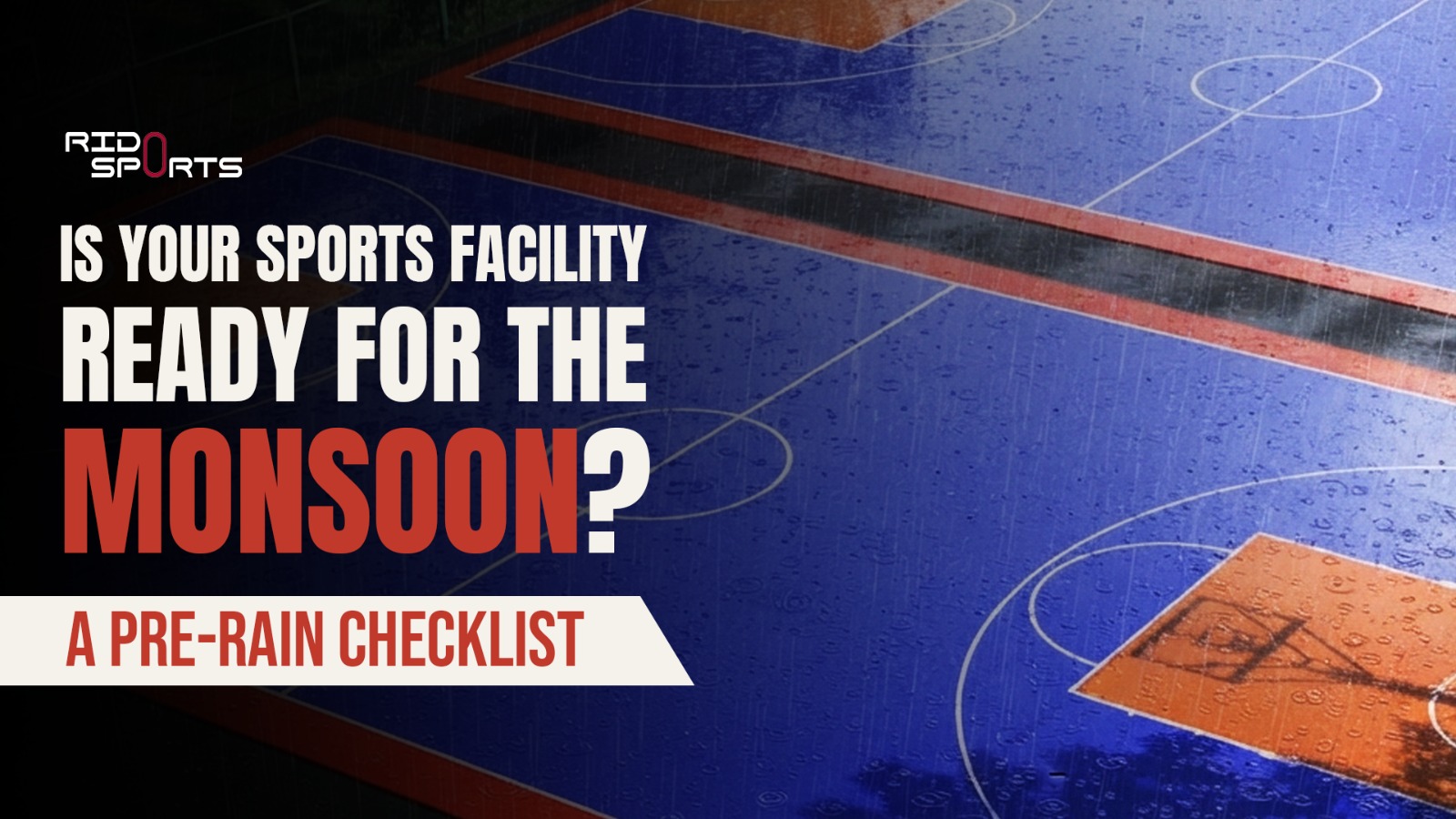
Monsoon season puts real stress on sports flooring and outdoor sports infrastructure across India. Heavy rain, humidity, and sudden temperature changes can damage courts, tracks, and turf if a facility is not prepared in advance.
A few simple checks now can prevent much bigger repair costs later. This checklist covers what every type of sports facility should inspect before the rains begin.
Why Monsoon Preparation Matters
Water seeps into small cracks, weakens the adhesives beneath flooring, and causes surfaces to lift, peel, or develop uneven patches. Standing water also creates a slip hazard and encourages algae growth. Facilities that skip pre-monsoon checks usually end up with bigger, costlier repairs once the rain stops.
1. Check the Drainage System First
Clogged drainage is the most common cause of waterlogging on outdoor courts and tracks.
-
Clear leaves, mud, and debris from all drain channels and outlets.
-
Confirm the surface still slopes correctly toward the drains.
-
Look for low spots where water collects after rain.
RidoSports Tip: If water collects in the same spot every time it rains, the base layer has likely settled unevenly, and the area needs resurfacing, not just cleaning.
2. Inspect the Playing Surface for Cracks and Damage
Cracks, bubbling, and peeling let water get underneath the surface, where it expands with temperature changes and turns small cracks into bigger problems.
-
Walk the full surface and note any cracks or lifted edges.
-
Check for bubbling or soft patches, a sign of trapped moisture.
-
Seal or repair minor damage before the rains begin.
3. Outdoor Acrylic and Synthetic Courts
-
Check the UV-resistant top coat for wear or fading.
-
Confirm line markings are still clearly visible.
-
Check net posts and fencing anchors for rust or looseness.
4. Synthetic Athletic Tracks
Whether it is a Full PUR, Sandwich System, or Spray-On track, the seams and edges usually show monsoon damage first.
-
Inspect seams and joints for lifting or separation.
-
Check that grip is consistent across the full track.
-
Check edging and kerbs, since pooling here often signals a drainage issue.
5. Artificial Turf Fields
Heavy rain can wash away infill and clog the drainage layer beneath turf.
-
Check infill levels, since rain can shift or wash it away.
-
Clean turf fibres of debris and mud that block drainage.
-
Confirm the perforated drainage layer is not clogged.
6. Indoor Flooring: PU and Wooden Courts
Indoor courts avoid direct rain, but humidity and leaks can still cause damage.
-
Inspect the roof and skylights for leaks.
-
Check ventilation to prevent humidity buildup, which can warp wooden flooring.
-
Check moisture barriers under wooden courts and reseal any gaps.
-
Check indoor PU flooring near entrances, where tracked-in rainwater can lift edges.
RidoSports Tip: Wooden courts are more sensitive to humidity than PU or acrylic flooring, so check them a few weeks earlier than the rest of the facility.
7. Equipment and Fixtures
-
Check basketball poles, goal posts, and net posts for rust and stability.
-
Store movable equipment indoors during heavy rain.
-
Check that floodlights and electrical fittings near outdoor courts are weatherproofed.
8. Surrounding Areas
-
Trim trees or branches that drop leaves onto the court and block drains.
-
Check boundary walls and fencing for gaps that could let water in.
-
Confirm nearby walkways also drain properly, so water is not tracked onto the court.
Frequently Asked Questions
How early before monsoon should I inspect my facility? Four to six weeks before monsoon is expected, so repairs can be finished before heavy rain begins.
Can a sports court be resurfaced during monsoon season? No. Resurfacing needs dry weather to cure properly, so it is best done before or after the monsoon.
What is the most common cause of monsoon damage to sports courts? Clogged drainage combined with existing cracks in the surface.
Does artificial turf need monsoon-specific maintenance? Yes. Infill levels and the drainage layer beneath the turf should be checked and cleaned before heavy rains.
Get Ahead of the Monsoon
RidoSports has spent over 30 years building and maintaining WA, ITF, BWF, and FIFA certified sports flooring across India, including schools, universities, residential societies, sports academies, and government and defence facilities. Most monsoon damage is preventable with a timely inspection.
If your facility needs a pre-monsoon check, drainage correction, or resurfacing, RidoSports can assess it and recommend the right fix before the rains set in.
A short inspection today can save a much larger repair bill later. Contact RidoSports to schedule a pre-monsoon check for your facility.