5 Warning Signs Your Sports Court Needs Resurfacing
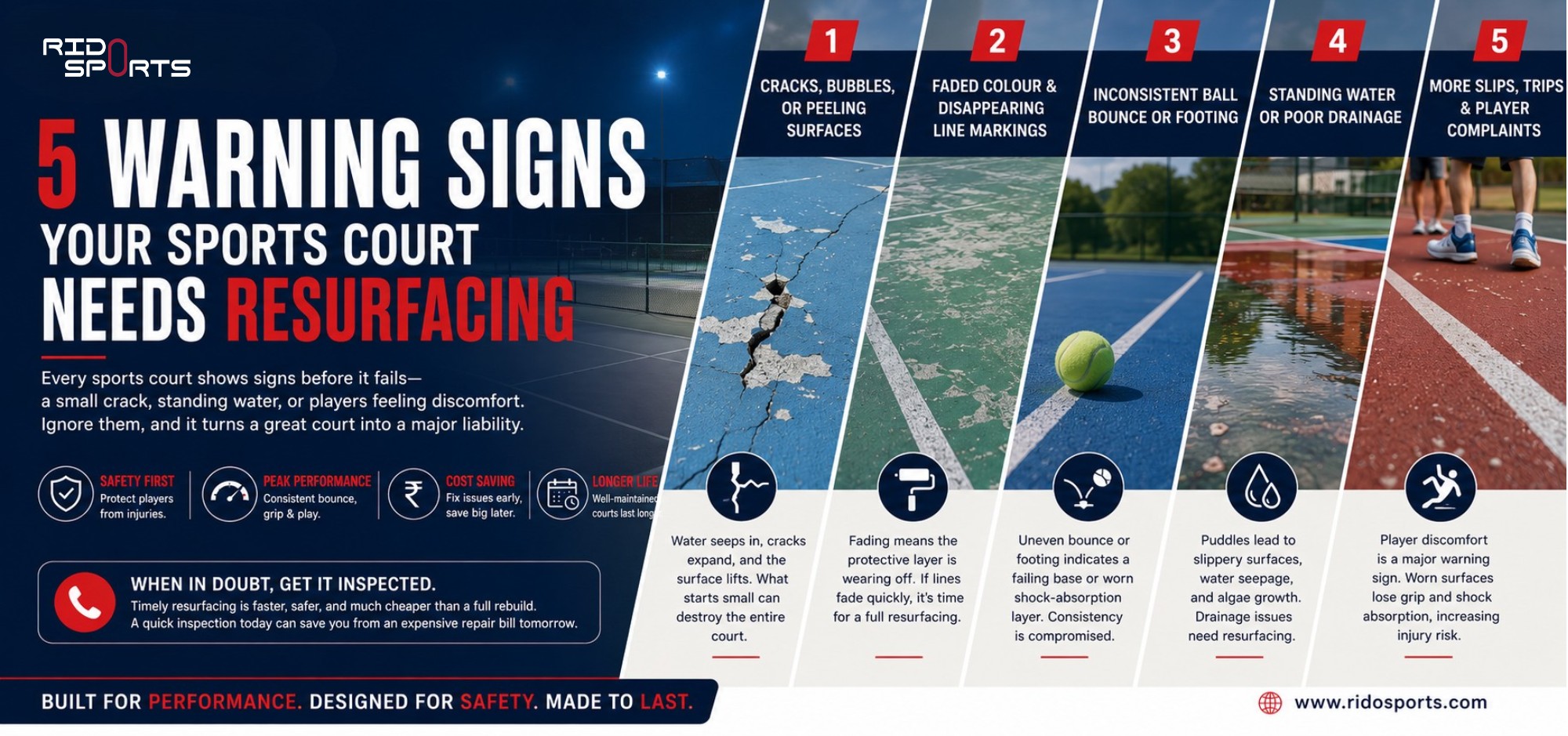
Every sports court shows signs before it fails—a small crack, standing water, or players feeling discomfort. Ignore them, and it turns a great court into a major liability.
With over 30 years of building ITF, BWF, and WA-certified courts across India, RidoSports knows resurfacing isn’t just about looks. It’s about safety and performance. Catching damage early saves money.
Here are five warning signs your court is quietly asking for help.
1. Cracks, Bubbles, or Peeling Surfaces
Most people delay fixing sports courts, ignoring the obvious signs. Even a tiny crack on an acrylic or PU surface allows water to seep underneath. During temperature shifts, this trapped moisture expands, turning small cracks into bubbles, peeling flaps, and lifting flooring.
This issue is highly common in India, where non-WA or ITF-certified courts degrade rapidly under extreme heat and heavy monsoons. If your court has multiple cracks, it is no longer a simple maintenance problem—it is a clear sign that you need a full resurfacing. Act early before a minor issue ruins the entire surface.
2. Faded Colour and Disappearing Line Markings
Sun exposure gradually breaks down sports court surfaces, causing vibrant acrylic courts to become faded, patchy, and worn.
While this may seem insignificant, fading is an indication that the protective top layer is deteriorating. Disappearing line marking is the clearest sign. Game suffers and safety risks increase when boundary lines become difficult to notice.
Resurfacing is a better long-term plan if the lines are getting repainted constantly to keep them visible.
3. Inconsistent Ball Bounce or Footing
Regular players often notice court issues before visible damage appears. If a basketball bounces oddly or a badminton court feels uneven underfoot, the surface has likely worn down inconsistently. This usually points to a failing sub-base or a degrading shock-absorption layer.
Sports standards (like WA and BWF) require uniform bounce and grip across the entire court. Once consistency drops, the surface fails playing standards—a clear warning sign that it’s time to resurface.
4. Standing Water or Poor Drainage
Check your outdoor court after a heavy rain. If puddles linger for hours, the drainage slope has likely warped because the base layer beneath the synthetic or acrylic flooring has settled unevenly.
Standing water is a major risk. It seeps into gaps, destroys adhesives, and triggers slippery algae growth. In heavy monsoon regions, poor drainage is a massive red flag. It proves that quick fixes won't cut it anymore, and full resurfacing is the only smart, long-term solution.
5. More Slips, Trips, and Player Complaints
The clearest warning sign of a failing court isn’t visible, it’s heard in player complaints. Pay attention, if athletes start mentioning slipping, joint pain, or avoiding specific court areas.
Long before it appeared damaged, worn-out surfaces lose its grip and shock absorption ability. These courts are designed to protect knees and ankles, but once that built-in cushioning breaks down, every jump and sudden stop forces the player's body to absorb the dangerous impact.
No safety certification lasts forever against heavy use, weather, and time. Player feedback is the one warning sign you cannot afford to ignore.
When in Doubt, Get It Inspected
Individually, these signs might seem minor. Together, they mean your court is overdue for professional care. Whether it is a housing society tennis court, a BWF badminton hall, or a defense facility running track, timely resurfacing is faster, safer, and much cheaper than a full rebuild.
If your court looks worn out, it is time for an expert assessment. RidoSports has built and resurfaced India’s sports infrastructure for over 30 years. Contact us today; a quick inspection now can save you from an expensive repair bill tomorrow.